Our Yearly Playlist
A daily reminder to do something
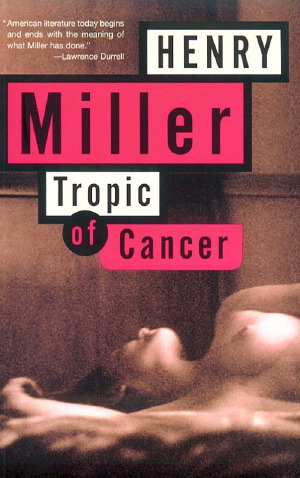
#22 in progress. Tropic of Cancer by Henry Miller is a half fiction, half autobiographical account of the author’s life as a struggling writer in Paris. It was first published in 1934 in Paris, but didn’t hit America until 1961. Its publication in the states led to an obscenity trial that tested many American laws on pornography. Although it depicts frank and graphic sex, it is by no means erotic. In fact, the sex is rather depressing. The “sex scenes” are more about the human condition as all of the woman are either prostitutes or damaged human beings looking for something better than what they have. And the men are just as F’ed up. Although this novel is basically plotless, it was a page turner for me because of what the author had to say about himself and his fellow man, none of it dated despite being written in the thirties. The novel is essentially one long essay on the underbelly of life.
One of the reasons I made reading these classic novels a goal of mine was to hopefully learn how to become a better writer. Tropic of Cancer is considered a masterpiece because of Henry’s raw honesty. He showed you everything, the good, the bad, and the ugly. Reading this I realized that I tend to censor myself too much, too afraid to be naked and judged. Looking back on my life, I’m not all that surprised. I was a shy kid who went to nine different schools before even attending high school. I learned to adapt by sitting in the back of the room and flying under the radar. As long as I didn’t expose myself I wouldn’t be judged. I started to write in high school, but my English teacher was more concerned with spelling and grammar than content. I read a lot as teen, but mostly nonfiction books about baseball. Instead of growing up on Fitzgerald, Hemingway and Henry, I read George F. Will, Roger Angell, and the editors of The Sporting News. The writing was top notch, but it was also straightforward and safe. My first screenwriting teacher was a nun at Marquette. No way was I going to expose myself to a nun. My screenwriting teacher at AFI, a man who made his mark writing Pocahontas II and a few episodes of Touched by an Angel, focused on his 100 rules of screenwriting. #4: Never more than three lines of action at a time. #23: First Act can be no longer than twenty pages. #71: Your characters can never respond “whatever”. I actually practice that last rule, but my point is is that I was groomed to be more of a journalist than story teller. My influences and mentors never encouraged me to explore emotional truth, but that is what true story telling is all about. It’s not the graphic depiction of sex in The Tropic of Cancer that is jarring, it’s the emotional truth behind it. Where Henry used sex to expose and magnify the heart of his characters, Jack London often used nature, and Hemingway once used a big fish. The bottom line is that the act doesn’t compare to the reason. Of course, nearly every writer knows this, but spend enough time in the Disney system of screenwriting as I have and you will begin to homogenize your writing in hopes of appealing to everyone to increase your odds of a sale. When everything boils down to a ten second pitch or twenty word log line, character is the first thing to go. The suits want to hear about the plot and the action set pieces that they can sell in a trailer or put on the poster, so you chuck the most important elements of story telling out the window and focus on the car chase. Now, that’s obviously a recipe for disaster because from the hundred of action scripts that the studio has to choose from, they’re going to pick the one with the most emotional truth whether they know it or not. None of this is particularly revelatory, but this novel did remind me that I’ve been focusing too much on the “what” and not enough on the “who and why” which is what makes a story truly great.
 Our Yearly Playlist